Covering 7 hectares, the Victoire d'Affaux Vineyards produce four prestigious beaujolais appellations: fleurie, moulin-à-vent, saint-amour, and bourgogne blanc.
The subtle beauty of our wines can be identified within varied organoleptic profiles, thanks to the plot vinification of our grapes.
The entire estate is currently undergoing organic conversion: helping to preserve the environment, recreating a rich biodiversity, and encouraging the return of agroforestry are values we hold dear.
The choice of plot
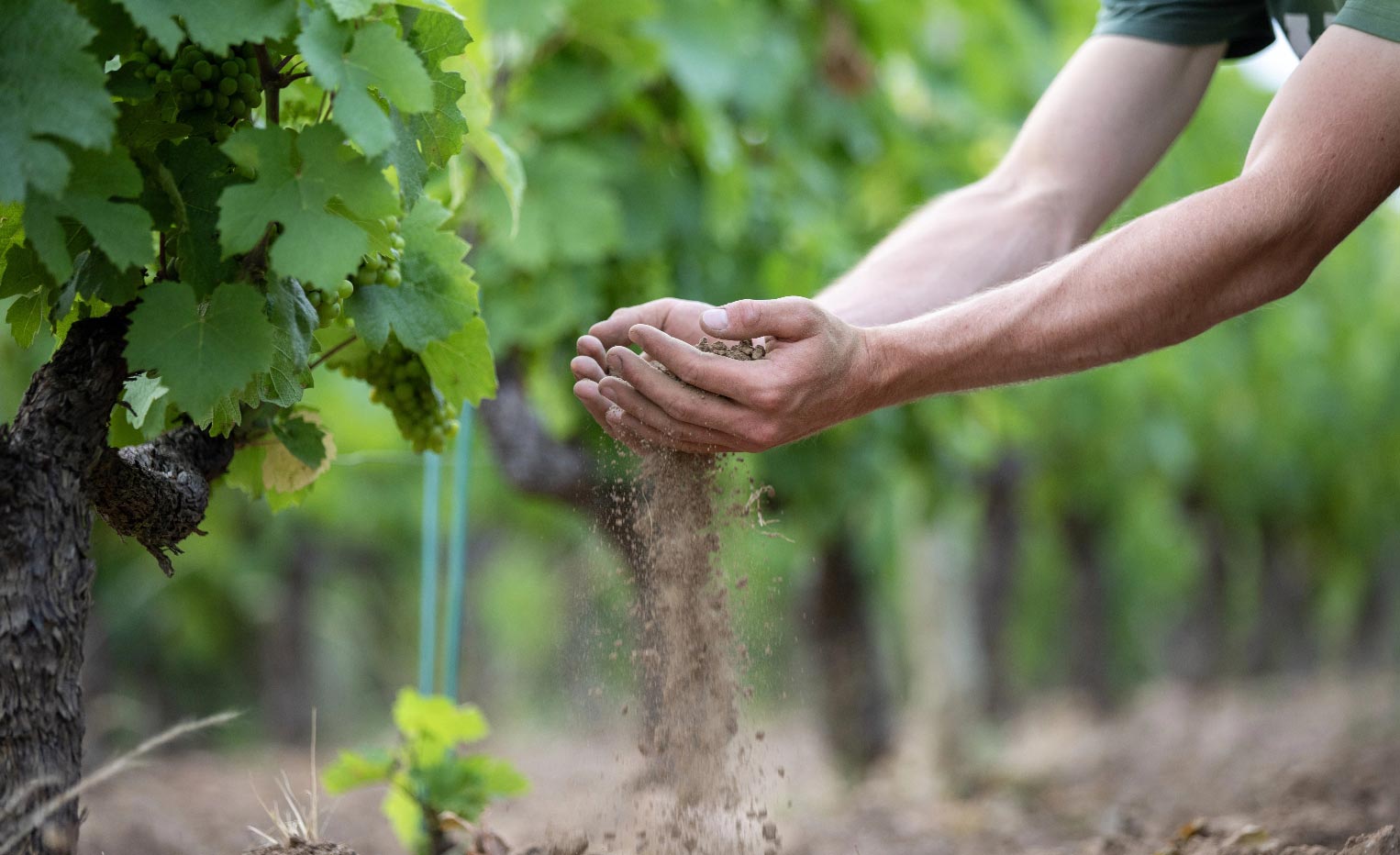
Each of our cuvées is the result of a carefully selected plot of land. Producing high-quality wines with unique organoleptic profiles is what the new generation of Beaujolais winemakers are working to convey. At Vignobles Victoire d’Affaux, we work our wines differently depending on the composition of the soil. The beautiful pink rock with its many crystals, granite, is the identity of the Beaujolais terroirs. However, each soil is unique: the manganese at Greneriers, the sand at Burdelines or the clay at Maisons-Neuves are all compositions that modify the organoleptic profiles of our wines. This is why we produce top-quality wines that draw all their elegance from the Beaujolais terroirs.
Since 2019, the estate has been HVE3 certified, and no herbicides are ever used on its soils.
A Meaningful Organic Conversion
Organic farming is an obvious choice for Vignobles Victoire d’Affaux. Since 2019, the estate has been certified HVE3, and no more herbicides are applied to its soil. Offering our customers selective, value-driven wines made using organic methods is the natural path of the estate in this new century.
As a family estate for several generations, we are the guardians of the family land, which we will pass on to our children, and we have a duty to preserve and take care of our land.
Agroforestry
The estate is not only made up of vines. An orchard with 15 varieties of fruit trees, woods, and meadows, all in symbiosis, form a complementary ecosystem that we strengthen every year. Several dozen trees of various local species have been replanted, including oak, lime, and ash.
This biodiversity is also accompanied by the desire to reintroduce flora and fauna into the vineyard, with the planting of hedges around our plots, which creates natural habitats for animals. These hedges also have an advantage for the vines: they consolidate the soil with their roots; they provide shade; and by breaking the wind, they preserve the grapes in the event of a storm.